Feeds:
Posts
Comments

Archive for the ‘Uncategorized’ Category

DSK apprehended

[/caption]

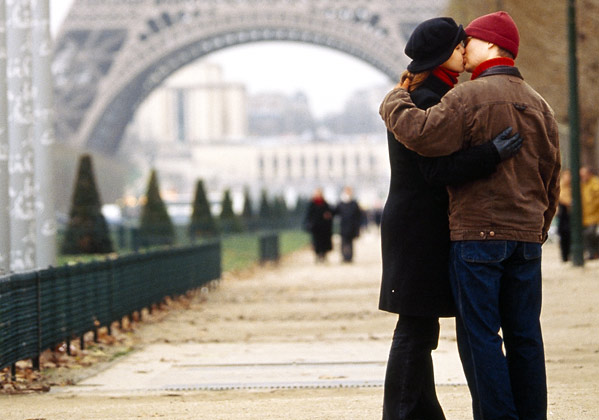
Seduction Paris-style

J.J. here…It looks as if fate has turned again for M. Dominique Strauss-Kahn, and in another stunning reversal of fortune, he may soon be a free man. He may even, who knows, once again be the Socialist candidate and a real contender to become President of France. If so, the real question will be, how many women support him now?

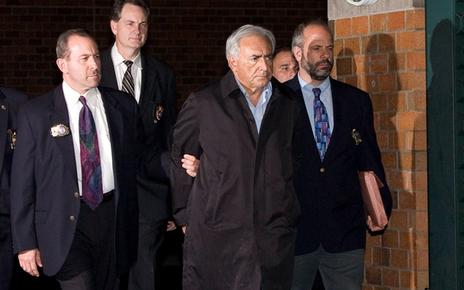
For DSK, as he is known, the fall from grace – and his world leadership position as head of the International Monetary Fund – came with the seemingly credible accusation of a chambermaid, a young immigrant from Guinea, that he assaulted and raped her after she entered his swish New York hotel room to clean it. He was snatched from a Paris-bound flight out of JFK, arrested by New York law enforcement officers, and famously photographed handcuffed and disheveled.

Then it turned out that the chambermaid had her own issues – lying among them – and that her plausible story was full of holes. So DSK is out of jail and may soon be released to France, where he has been portrayed as a kind of hero victimized by an out-of-control American justice system and crazed press. The problem, the theory goes, is vengeful and puritanical America, not a man known (and renowned) for his sexual appetites.

Hmm. Why do I think I’ve seen this movie before?

It all takes me back to those long-ago days at the Sorbonne when three of my friends had encounters with the suave, cravat-wearing, silver-haired seducer, Alain St.-Georges, famous prof of political science and specialist in American affairs. Each of the entanglements ended badly, but then there wasn’t even a vocabulary to deal with it. True, nobody was raped. But sexual harassment, predatory behavior, imbalance of power, victim’s rights? In 1962, all such concepts were still in the future. As was the idea of women’s solidarity. If my friends had publicly complained, they would most likely have suffered public ridicule. Those pathetic, puritanical pin-heads. Those Americans.

But now it looks as if some French women are speaking out and fighting back. Maybe it’s no longer O.K. for alpha males to abuse power and, short of rape, to seek sexual favors wherever and however they want. Maybe emboldened French women will use the ballot box to say, in elegant French of course, “We won’t take it anymore.”
Read Full Post »

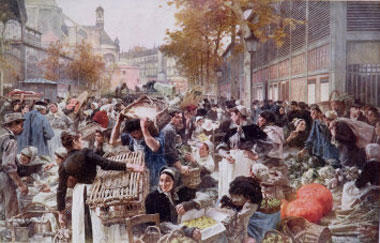
Les Halles, Soul and Stomach of Paris

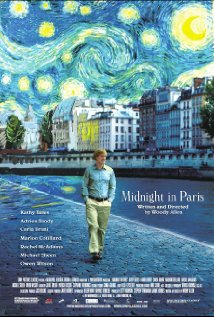
A couple days ago I did an interview with French-American t.v., and one of the questions that came up was about Paris in the old days, meaning the ‘60s. Was it better then or now? Not a new question to be sure: Just ask M.F.K. Fisher or Proust, or Woody Allen for heaven’s sake, who has just made a film about the ever-receding horizon of the “real Paris.”

And of course, when changes are made to a beloved skyline, people are bound to be upset. The Eiffel Tower, after all, the ultimate symbol of Paris, was decried as an ugly monstrosity of the Industrial Age when it first loomed over the Seine.

Quatorze Juillet at the Eiffel Tower

Personally, I don’t believe it’s the addition of the new that’s so disturbing, as the destruction of the old. One thing I do still miss about that “old Paris,” is the great central market Les Halles, sometimes referred to as the soul and the stomach of the city. Its heaps of produce, the sounds of the truckers and vendors and buyers, the smells that arose from the cheeses and meats, to say nothing of gutters nearby, produced visceral and unforgettable sense memories. And that doesn’t even get to those late nights spent there seeing in the dawn, eating onion soup and drinking hardy vin du pays.

As Luc Sante said in 2010 in the New York Review of Books, “Les Halles ws more central to the idea of Paris in the minds of its own citizens than any tower or monument could ever be.”

The destruction, or modernization, of Les Halles began in 1970 until it was transformed, mainly into a mindless underground shopping mall.

So, in this case, old Paris or new Paris? You make the call.

Read Full Post »

MFK Fisher, the incomparable chronicler of France (and food) wrote that her husband used to regale her with tales of the “real Paris” – in the ‘20s – while they were living in France in the ‘30s. Later she revisited old haunts while introducing her children to France in the ‘50s, telling them about the “real Paris” of the ‘30s and ‘40s. Now Woody Allen has made a fanciful film for romantics of all ages on that very subject – finding the Golden Age of Paris. The Woody Allen-like protagonist of “Midnight in Paris,” the hapless would-be writer Gil, wants nothing more than to wander the moody streets and conjure the artist greats of the past, but his hard-nosed fiancée is there to shop. You can see where this is going, and eventually our hero does time-travel to a far, far better place – Paris in the ‘20s, schmoozing with Hemingway, Fitzgerald, Zelda, and Gertrude Stein. Then a dark-haired beauty leads him to an even more distant perfection – la Belle Époque – where the likes of Monet and Degas pine for the authentic Paris of the Renaissance over the strains of the can-can. This film is a delight, both a poem and a paean to a city that might be most beautiful in the rain. As for it’s most magical moment? The ‘60s, of course, when I was there. Or was I?

Read Full Post »

Brotherhood of Monks from "Of Gods and Men"

Seeing the great French film “Of Gods and Men,” recently, which documents the lives of a small group of Cistercian Brothers living their monastic lives among the rural people of mountainous Algeria in the early 1990’s, I was reminded of my friend Hugues. A French colleague had asked if I might be able to put up his protégé for a couple of weeks while he found a place to stay and learned the craft of print journalism, to say nothing of learning English. All I knew was that his young friend was a broadcast journalist and would let me know of his arrival. One evening – my birthday to be exact – my doorbell rang and a curly-haired young man with mischievous eyes carrying a large backpack stood on my stoop. He looked like the Little Prince who had just dropped in from a distant planet.

The two weeks stretched over several months and young Hugues attacked English, food, wine, cigarettes, adventure and journalism with equal enthusiasm. He charmed everyone in his path and was a regular in the newsroom where I worked. “I don’t give a flying fuck” became his trademark expression.

Some months after his return to France, where I assumed he was successfully plying his trade, I got a phone call from him while at work. “I have important news,” he announced, and suggested I sit down. Colleagues, also fond of him, gathered near the phone to learn his fate. w I assumed he was engaged. “I am taking religious vows in one week,” he said to our astonishment. “I am very nervous,” he went on. “I’m smoking and drinking whiskey like hell.”

Then, after eight days, he went completely silent – hard to imagine for a garrulous young broadcaster, but normal for a novitiate after taking vows. In a year or so, he had acquired a new name, and I began to hear from him again through letters notable for their quirky mix of French and English, bad handwriting, and monastic addresses. He had struggled with his decision, but stuck with it. He moved to various countries in Eastern Europe, where he served as a priest, worked with the poor, the deaf, the abandoned. His life was very hard, but rich. At times he suffered. At times he thought – why, I was never sure, given my marriage and family life, my lack of a faith like his – that I, too, had a similar calling. He always assured me, and I find this comforting, that he prays for me regularly.

Still, I had trouble envisioning his life, understanding how, exactly he lived, and more importantly, why. Then I saw “Of Gods and Men,” and felt I had seen my old friend in his chosen life. I saw the goodness, the anguish, the humanity of those monks, and the strength they found in their God and their community. Although the Hugues I knew has long since disappeared, I recognized his resolve and his strength in those brave Cistercians, and knew that had he been there, he, too, would have made the decision to stay and serve in the face of certain death. At last I understood.

Read Full Post »

What They Ate

     For les demoiselles, arriving in Paris meant a daily exercise in educating the senses, and nothing was more transforming than the sense of taste, in the form of French food. (more…)

Read Full Post »

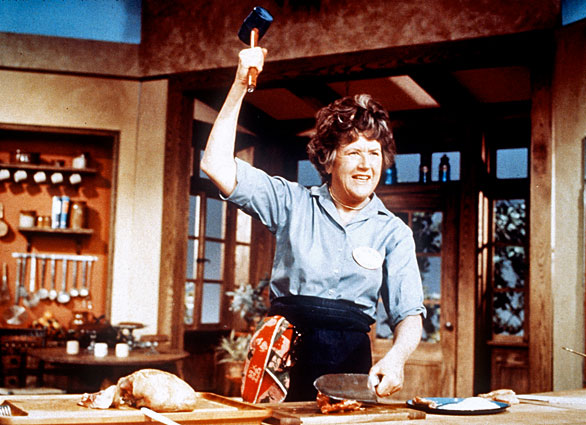
Living with the retired Professor of Cuisine, Gracie ate exceptionally well. The price was the nightly quiz and lecture, often about the abominations of American cooking. (more…)

Read Full Post »

But what Madame Gautier did not realize was that one year before, a bomb had been set off in the international world of French cuisine, (more…)

Read Full Post »

Camille, Gracie’s roommate, took to trying to bail Gracie out before Madame could bear down on her. Camille began to tip Gracie off. (more…)

Read Full Post »

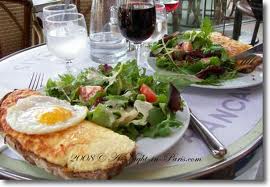
Despite the dreaded cheap, starchy meals in the student dining rooms, les demoiselles quickly branched out to appreciate the wonders of French food, even that which was inexpensive and simple. Salads, cheeses, quiches ,all with a nice wine, and even eggs.  (more…)

Read Full Post »

     At Madame Gautier’s table, les demoiselles were likely to encounter rich gateaux, cremes caramels, mousses, and in other venues they discovered delicious ice creams, pastries and glazed fruits. Once, when J.J. turned her hand at making a pumpkin pie, using the artistry acquired from her French grandmother, (more…)

Read Full Post »

« Newer Posts - Older Posts »