Feeds:
Posts
Comments

SATURDAY

The little Engine that Could

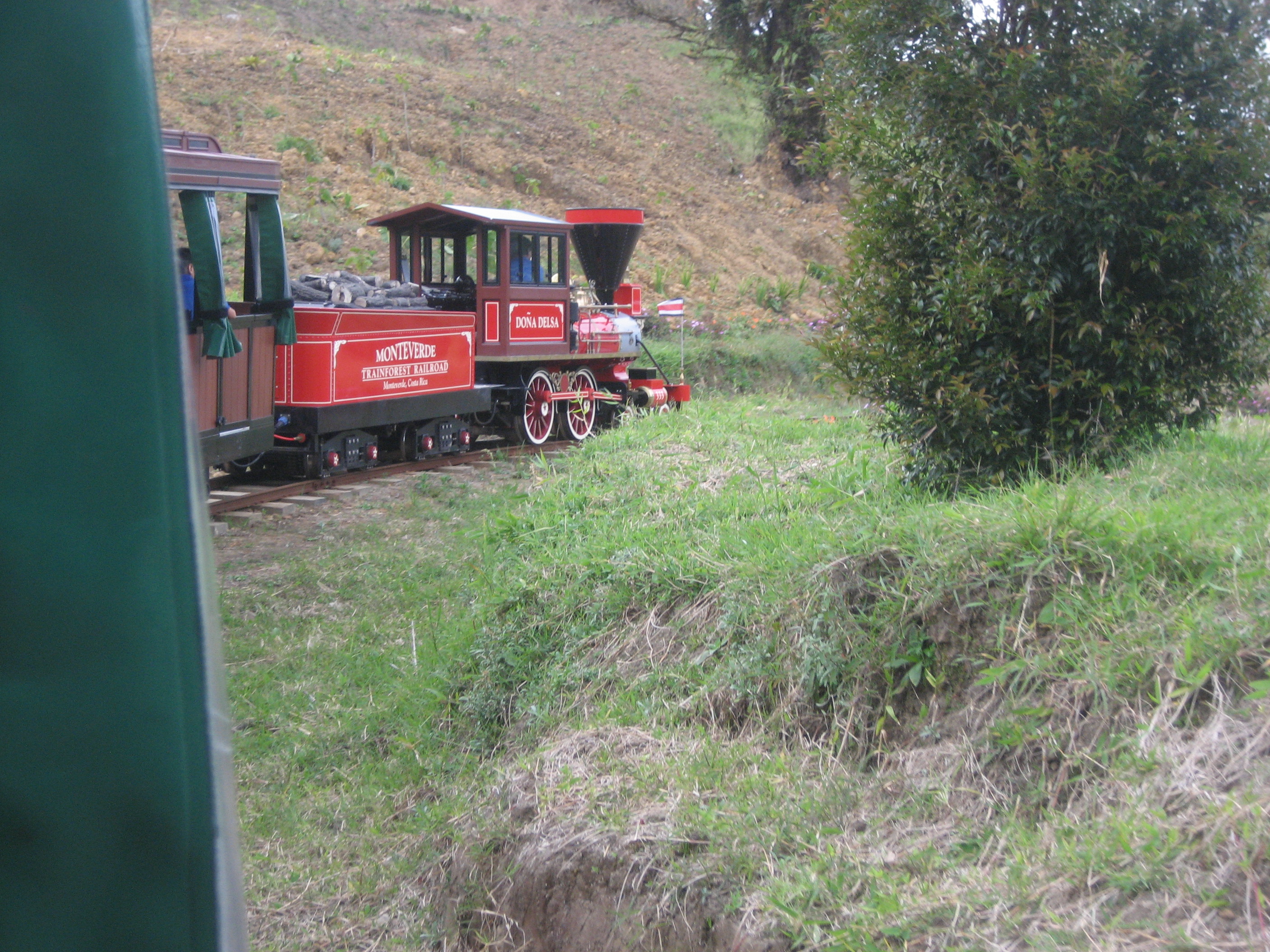
We are slowly working our way through the variety of ways to see the rainforest. Admittedly, some of them are over-the-top touristy, but there you are. No other way to walk the canopy, for example, than to work with a company who owns the walk. So we bit the bullet and went for another touristy bit, a small “steam” train with open cars through a primary (virgin) forest. It was lovely. Continue Reading »

Pura Vida 2

A Day in the Life of…

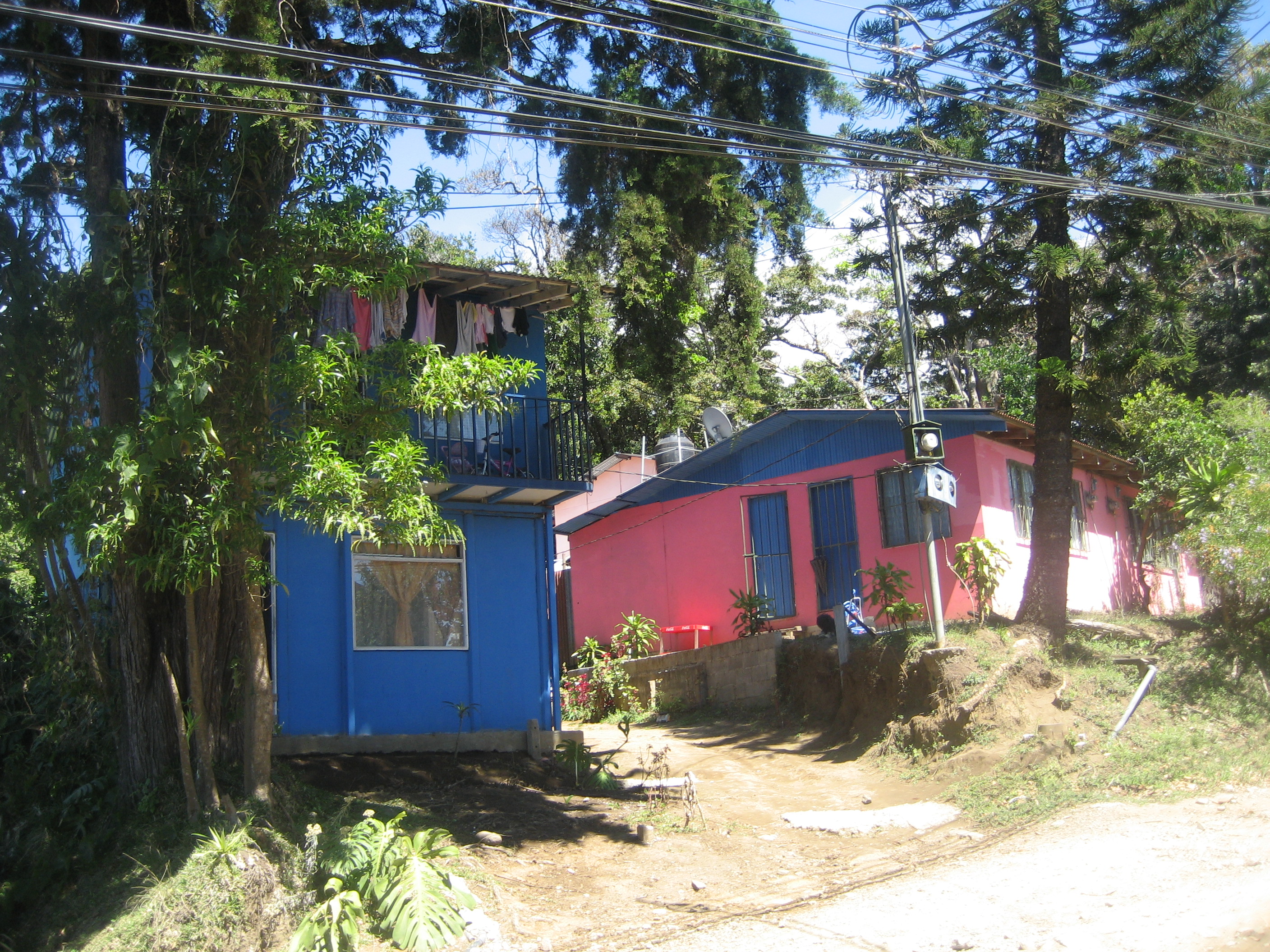
Local Color on the street where we live

Even though we’ve been here so short a time, it was easy, and in a way desirable, to find ourselves living some kind of “daily life.” Since school and its demands and pleasures — and homework — takes up a considerable part of our days, we’ve found ways to have a routine.  Since everywhere we go is by foot (unless we’re being picked up to go into the reserve) and since all paths are hilly and many rocky, I guess you could say we have our daily ups and downs. Continue Reading »

Pura Vida1

This translates roughly as the good life, Costa Rican style. Continue Reading »

La Fin de la Semana 2

Domingo.

What to do on a Sunday when you’ve walked for miles on Saturday and had to resort to resting your swollen legs while cramming your swollen head with Spanish verbs?

Walk some more.

This time it was preplanned and “turistico,” but oh so wonderful. At 7-something we piled into a tacky van with ads all over it so you couldn’t see out the windows and bumped our way up more unpaved, rocky roads to the Santa Elena Reserve so that we could walk in the forest canopy.

Instead of walking on the forest floor, looking up, we walked among the treetops, looking down. There were stretches of trail along the ground, then stretches of suspension bridges high over everything, including the sounds of rushing water below that for the most part was invisible. The other sounds were amazing bird calls, some seeming close enough to touch, but the birds remained mostly out of sight too. The trees were huge, with some ferns big enough to house a whole family beneath their fronds; the trees and air seemed filled, too, with creepers, vines, things that appear to grow in the air, and everywhere the world was green in a hundred shades of variation. There were flowers, too, but they seemed to come out sparingly and were usually bright red.

      Not being a botanist, and not even knowing the names of the plants we were seeing, I feel inadequate to describe what is clearly a different world, in the forest canopy, and one of the most exotic and moving I’ve visited.

   It was worth the annoyances of having to be that loathsome thing, a tourist, and having to endure others of the same annoying species. It was worth the bumpy roads, broken parts of the trails and bridges that made walking very hard. It was even worth the screams of the crazy zip-liners who were flying around where we were walking.

I’m thinking of trying that next.

What to Do?

Walk.

It started Saturday with the up and down walk to Santa Elena for the usual sorts of Saturday chores: getting breakfast out, visiting a gallery or two, going to the Post Office, finding a bookstore, a miney machine, and the biggie, the farmer’s market. We’ve decided to buy at least one fruit and one vegetable each time we shop that we don’t know, and maybe can’t even find the name of. This time we came home with a chayote (pretty good raw or cooked with other veggies) and a guanabana. So far we’ve been dancing around this fruta, because it’s got prickly spines and, I read, its seeds are toxic. OK, it’s good as fruit juice, a theory I even tested in a restaurant.But I digress: we returned to the apartment loaded down with groceries for this week’s cooking. Then we turned around and went down the road the other way toward the village of Monteverde proper.

        The main destination was The Children’s Eternal Rain Forest, a place with a most interesting story, about which later. Mainly, we wanted to check it out, and found a little nature center there and a charming sort of classroom with green/rain-forest themed murals all set for groups of kids. Then we walked further, taking some of the well-marked trails through undisturbed forest with dappled light. Very peaceful and beautiful, and despite being in the part of the reserve called Bajo del Tigre (jaguar), there was not an animal in sight. The amount of forest in the preserve is impressive, though: 54,000 acres, the largest private preserve in Costa Rica.

     After leaving the reserve and getting back to the main road again, we decided to keep going to the famed (around here anyway) cheese factory. along the way taking note of some interesting places: some sort of coop where kids were playing soccer vociferously, a sign to the “grooviest cafe” in Monteverde which boasted Internet, movies on Friday night, and live music during Happy Hours.  But we pushed on to the Cheese Factory, opting for some of its advertised ice cream.  Just as we arrived, so did a huge tourist bus full of Tico tourists. It was a long wait for an ice cream, but worth it.

      Then went a few meters more to cross a bridge over a roaring stream that Doug was eyeing to figure out how to fish. At that point, we decided to declare victory and trudge uphill back home. Only after looking at the map later did I realize we’d stopped just short of the “famed” Quaker Friend’s School. Again another story.

Tapas 2

Cloud Forest, Monteverde.

After following the coast road west (again, for me) we took a sharp turn north to the old port city of Puntarenas to head north and east for about an hour and a half. Suddenly the paved road stops and the last twenty-some miles is over rocks and dirt to reach the outskirts of the main little village up here, Santa Elena. Then the road is paved again until it literally stops a few meters beyond the site of our school. Our apartment, about a five minute walk up hill to get to campus, is on a “traditional, natural” road: dirt and boulders.

     It’s a wonderfully mixed area, with some super fancy hotels and restaurants catering to rich international travelers, more modest local homes, and some way more modest than that. We are about mile from the edge of the Monteverde Reserve, and will go into it the first time this weekend. Meanwhile, we are awed by how beautiful it is here: from our road we can look over ranges of hills, green with magical skies everywhere, and when it’s clear enough to the west, see the huge Gulf of Nicoya. Behind us, of course, is the mountain with its famous clouds, and the lush rain forest with its burst of flowers, high winds, rain, and sunshine, sometimes all at once.

Our school, Centro Panamericano des Idiomas (CPI) is set on a gorgeous, spacious campus, with gardens, fountains, vistas, hammocks for the convenience of those inclined toward siestas, and, ahem, an outdoor enclosure with  jacuzzi. They did advertise this place as close to heaven.

We had a half-day to organize ourselves in our lovely little apartment, Casa del Toro, which also has a small garden, patio, and fountains, and to walk to town and get supplies to wash and cook. Then classes started at 7:00 Monday morning, and it’s been intense Spanish for the week and what seems a very good program. More of that anon, when I can actually put together a sentence without tripping over myself. But lots of studying has also been interpersed with activities, such as a movie (Dustin Hoffman, Meryl Streep and Jim Carey dubbed in Spanish — I went for it), cooking class — Doug went for it, and salsa lessons. We both loved that one. I also have got a tutoring gig with a local girl from the village. She’s 12, and her English is even worse than my Spanish, so it’s a go!

Tomorrow we walk into town early for the farmer’s market, then to the Children’s Eternal Rain Forest,about which I hope to write a piece, and then Sunday a walk in the forest canopy, a thing I’ve always wanted to do.

Tapas 1

San Jose

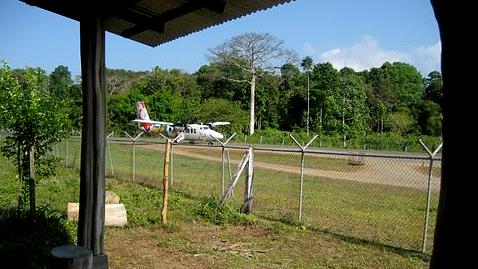
Only a week ago, we were leaving the steamy, exotic low-lying jungle to fly into San Jose for the weekend. Arriving in our little turbo-prop and flying in low gave us a really good sense of the layout of the city. A sea of tin-roofed shanty towns surrounding some “modern” and older, more attractive quarters in the heart of the capital. The Ticos will tell you that the shantytowns all belong to Nicaraguans, and they are the cause of the city’s well-publicized crime, too.  The journalist in me listens with one ear cocked.

     Happily Doug had made reservations in a hotel, the San Tomas, which he had already discovered. The private home of a former coffee baron, it was built over 100 years ago and had the high-ceilinged, antique-laden charm of a similar home in New Orleans, that is, BK, Before Katrina. The manager was a very affable, hip young guy with excellent English who was most excited that we were from the Bay Area, the home of his favorite band. He’d waited a dozen years to hear them live, and they are playing in San Jose in February. Metallica. He was over the moon.

   It was lovely to have great weather, a shower with actual hot water, a swimming pool, and a nice restaurant attached to the hotel so we didn’t have to be on the streets at night, an activity strongly frowned upon. As it was, a guy tried to grab my purse a block from the hotel during daylight, but I proved to be a tougher mama than he bargained for, and also let out a growl in several languages.

  Despite that incident, we thoroughly enjoyed walking alot: through the charming, artsy Aron district filled with charming old hotels (The Hemingway!) similar to ours, and tree-lined streets; to the town center and the very Baroque National Theater Building; to the great pedestrian shopping street in the center of town, where we found book stores and great ice cream; and finally to the National Museum. It is essentially the Costa Rican history museum, situated in the house of the former “Commadore,” and sporting a sort of Moorish tower. I loved the displays of pre-Columbian times especially, and the array of indigenous art, much of it in beautiful gold work.

     We also hit parks, an exceedingly seedy section of town near the Coca Cola Bus Station, the great transportation hub of the country, and one of the best restaurants we’ve ever found…a French, Latin, fusion place, Kalu, attached to an art gallery and very near our hotel. It was another incomparable recommendation of our friend Lenny, who among other things is a food writer, restaurant critic and great raconteur. 

After endless confusion about getting a van to take us to Monteverde, one arrived early Sunday morning, and we were off. Four and a half hours on national highways and other, more rustic, roads, and we again reached a different world.
click me

Sooner or later, the Osa experience had to end and we had to make the return trip to the airport, and had to have a final adventure which turned out to be Thanasis nearly getting knocked down when a big wave hit the boat broadside while he was trying to disembark. But that is another story.

For the last Osa afternoon, I opted for a walk on a quiet beach and a search for Scarlet Macaws while Doug went off on foot with his flyrod. I joined Laurie, Jim, and Thanasis and some other folks from the midwest for a last bumper-car boat ride across the water to the reportedly “Best beach, best beach in the Osa,” San Jocesito, according to Carlos. And as we dropped into one of the most idyllic palm-lined beaches I’ve ever seen, following a fringe of curving white sand, I needed no further convincing.  “Best beach,” said Carlos, “Mel Gibson beach.”

And so it is. It seems three years ago, Gibson bought a private tract of virgin forest and coastline, 20 acres for $4 million. But with caveats. In Costa Rica you can’t actually buy the beach. That, they say, belongs to the people. Private property can only begin 100 meters further than the highest tide. So local fishermen and mangy tourists and backpacker — anybody at all– can swim and camp and picnic on “Gibson’s” beach. Right in front of his house, a one-story, modest affair with a hammock in front and a window unit a.c. and a “Privado” sign tacked on a low wooden fence. It seems the Costa Rican gov’t. also discourages building McVillas these days, too.

We found no Scarlet Macaws that afternoon, but did see a pair of rare, flaming red Trogons, relatives of the mystical Quetzals. And after a final swim in that amazing, clear, bath-warm water, we all piled into the boat for the ride back and our last delicious open-air meal.

Before going up the path to the lodge, though, we did stop at one of the low-walled gardens to check for the rainbow boa. All 6 feet of him was happily coiled up, resting, and he appeared to be in a better mood than the last time we’d seen him. That would have been before lunch, when one of the staff arrived with a big white sack, and announced he’d caught something in the forest behind our rooms. We all went to look, and sure enough, there was the snake, who seemed to be getting agitated. An angry boa constrictor in a bag, “not so good,” the fellow proclaimed, whereupon he let it go in the front garden.

Night Critters in the Osa

A quiet day followed a quiet night of tripping, literally, up and down a trail filled with roots and stems, through the private reserve, aka, jungle behind our lodgings. We were issued headlamps and for two and a half hours slumped through the thick, hot forest full of bugs, reptiles, spiders and moths as big as a man’s hand. And there was ever Carlos, like a cheerful barker, “Scorpion spider, ladies and gentlemen, scorpion spider, step right up.” Actually, I was just as happy with what we did not see, and after my third and final cold shower of the day, was more than ready for a dreamless sleep.

For our third day, we decided against anything heroic.  Read mountain hikes and scaling waterfalls, scuba diving, horseback riding, etc. At about 85 F. and 90% humidity, you get the drift. In the morning we took a leisurely stroll to the village of Drake, where we had landed on the beach from the airport, and where Sir Francis had reputedly crash-landed a few centuries before. Evidently, I caught the spirit. As we followed a wooded path to the beach, we stepped up on a wooden plank covering a small stream. Just before reaching the end, I looked up to see none other than Surfer Dude, who clearly had not gone diving. Surprised, I stepped off the plank one moment too soon and lost a shoe in a deep sink of mud before doing a swan dive myself.

Embarrassed that he might expect such greetings from members of my gender, I tried extracating myself quickly. But he seemed rather other-planetary and appeared not to notice. Everything was “cool,” he said. “Hey, my B&B has A.C.” Doug and I looked at each other in wonder at the mention of a technology we’d not encountered in Costa Rica. And Surfer Dude drifted on, only to make a guest appearance at out lodge the next day, trying to hitch a boat ride.

Peninsula de Osa

Lunch in Sierpe

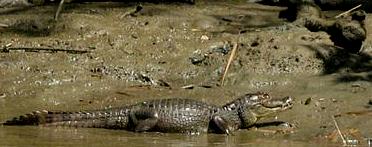
Along these river banks and even into the swamp channels, we saw scattered houses. Some more like lean-tos  with tin roofs and crooked wooden docks, some more substantial with brilliant paint jobs and splashes of flowers. One, a sort of listing pink box above an embankment where a none-too-friendly looking caymen was lounging sported a sign saying “Casa Cozy Massage… ” and a few other services.  But all types of these houses clustered together at about the mid-point of the sixty-mile river in”400 families” the town of Sierpe. We got off there to have lunch in what is billed as a Tico-Mex restaurant — Mexican with a Costa Rican flavor. To get there we walked from the water front with the requisite rusty-bottomed leaky boats, into the central plaza with well-appointed trees, benches and some play equipment, and one of the round stones of mysterious origin local to the Osa and made by ancient people for reasons nobody knows. We also passed by the schools — one elementary, one high school — which every town and village has and of which the Ticos are justifiably proud. Other landmarks of every town: church, cafes, soccer field.

The Las Vegas Restaurant, where we ate was painted bright yellow inside, had blue trim, red plastic coca cola tables and chairs, a large plant growing in a crooked tin drum, and proverbs in little squares plastered all over the ceiling. My Spanish was hardly up to the task, so I have a tangible goal for improvement. And our tacos and quesidillas were soon interrupted by the sounds of a helicopter which got closer and closer, until it landed on the soccer field next to us. Great excitement and people, especially kids, came out from everywhere to watch the spectacle. Three men got out and walked away somewhere. Somebody suggested maybe this was a drug deal. As far as we knew, it could have been anything.

More interesting revelations followed too. It seems that Carlos had a little girl of about 8 in that town, and obviously a relationship with the girl’s mother. He also has two grown sons in some other town, and who knows what other arrangements. He is very high energy guy who says he’s 61. Meanwhile, when we got back on the boat to boogey back down the river, a pretty young woman, an enchanting little girl of three, and a grandmother all got on with us. That turned out to be Didier’s family, and he looked as if he could still be in school himself.

Crocodile

What clock?

They seemed somewhat interested in the crocodile and large turtles we encountered, but not at all interested in joining us for a swim along the sandy beach where the Sierpe runs into the sea. The water was lovely, if warm, and I wonder if they just all thought we were mad for plunging into it. Certainly, I have to say, the grandmother must have viewed me, her contemporary, as partially deranged.